Indonesia stretches more than 5,000 kilometres from Sumatra to Papua, so asking for the best time to visit Indonesia is a little like asking for the best time to visit Europe. Still, a pattern holds for most first trips. Across Java, Bali, Lombok and Flores, the islands where most travellers spend their time, there is a dry season and a rainy season, and a handful of holidays move millions of people at once.
This guide covers both: the seasons region by region, using the forecasts of Indonesia's weather agency, BMKG, for 2026 and 2027; the holidays that fill trains, ferries and planes, with the official dates for 2027; the closures we follow at the volcanoes; and, at the end, a month-by-month table from December 2026 to November 2027.
The short answer
For Java, Lombok and Flores, come in the dry season, roughly April to October. The volcano sunrises are clearer, the sea crossings calmer and the trekking trails open. July and August are the busiest months, with European summer holidays and Indonesian school holidays on top of each other, so May, June and September are the sweet spot: dry, green after the rains and noticeably quieter.
The rainy season, roughly November to March, is not a write-off. It usually means heavy downpours rather than grey days on end, and the countryside is at its most beautiful. But boats are cancelled more often, some trails close, and you need spare days.
And whatever the month, check the calendar for Lebaran and Nyepi. In 2027 they fall in the same week.
Why the seasons differ across Indonesia
Indonesia sits on the equator, so it never has a winter. What changes through the year is the wind. From about November to March, monsoon winds carry moist air over the southern islands and bring the rains; from about April to October, drier winds blow up from Australia. The further south and east you go, towards Lombok, Flores and Sumba, the longer and drier the dry season gets.
North of the equator the pattern shifts. In northern Sumatra the rains come earlier, and BMKG expects parts of the Aceh coast to start their dry season as early as January 2027, when Java is in its wettest weeks. Papua and Maluku follow rhythms of their own. That is why a single "best month" never works for the whole country.
When is the rainy season in Indonesia?
BMKG publishes a forecast for each rainy season. For 2026 and 2027 it expects the rains to start later than usual across most of the country, after a long, dry El Niño year, and to be shorter than normal over about half of Indonesia's land.
- Java and Bali: rains begin mostly in December 2026, in some areas November, and peak mostly in February 2027.
- Lombok (West Nusa Tenggara): rains begin in November or December; the season is expected to be shorter than normal over most of the province.
- Flores and Komodo (East Nusa Tenggara): mostly from December, peaking in February 2027.
- Sumatra: the rains begin first in the north, partly in November, and peak in December 2026 over most of the island.
- Sulawesi: from November or December, with the peak in December in some areas and February in others.
- Papua: from November or December, mostly peaking in February 2027.
A forecast is a forecast. Treat these months as a guide, not a promise, and check the latest outlook a week before you travel.
Region by region
Java: Yogyakarta, Bromo and Ijen
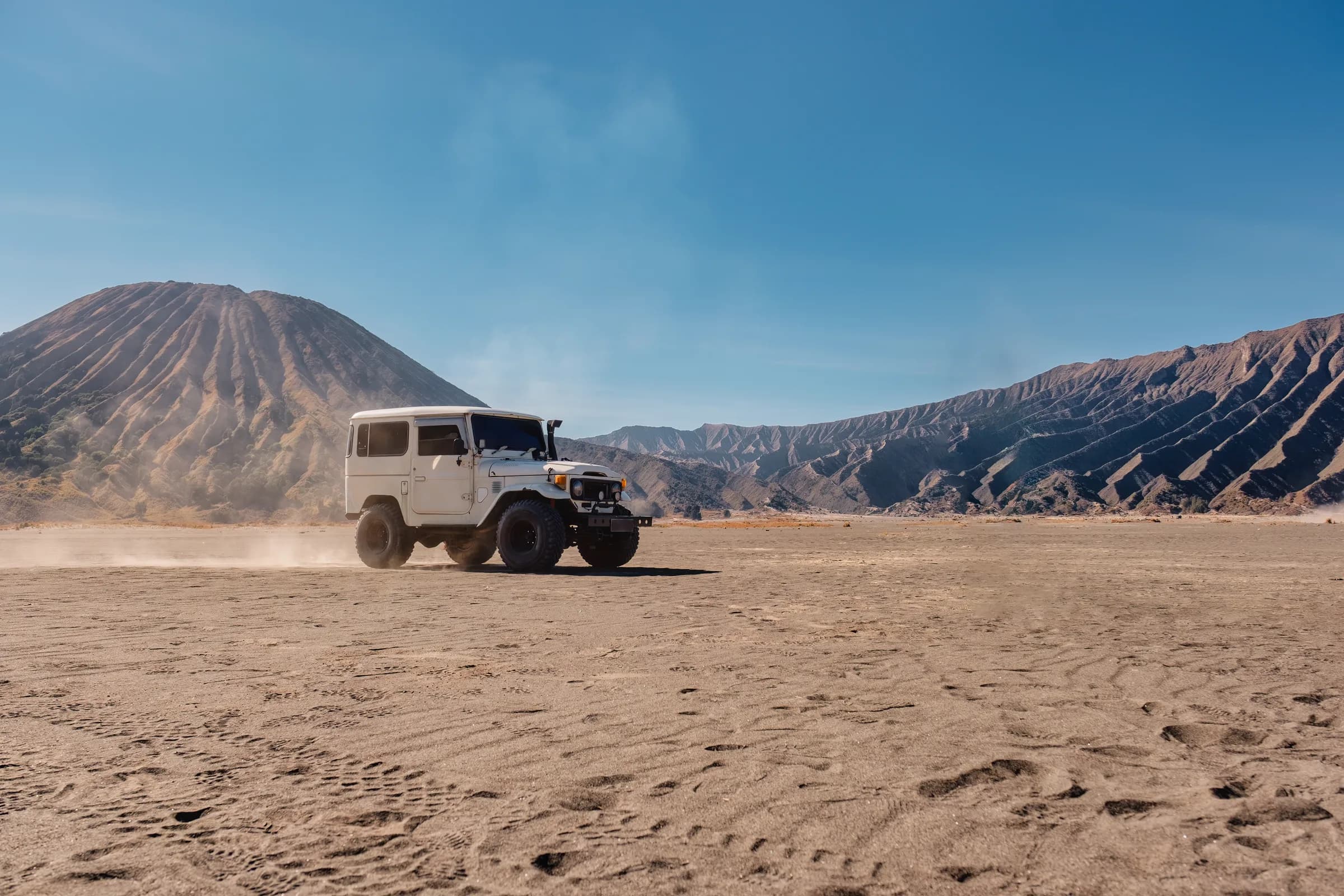
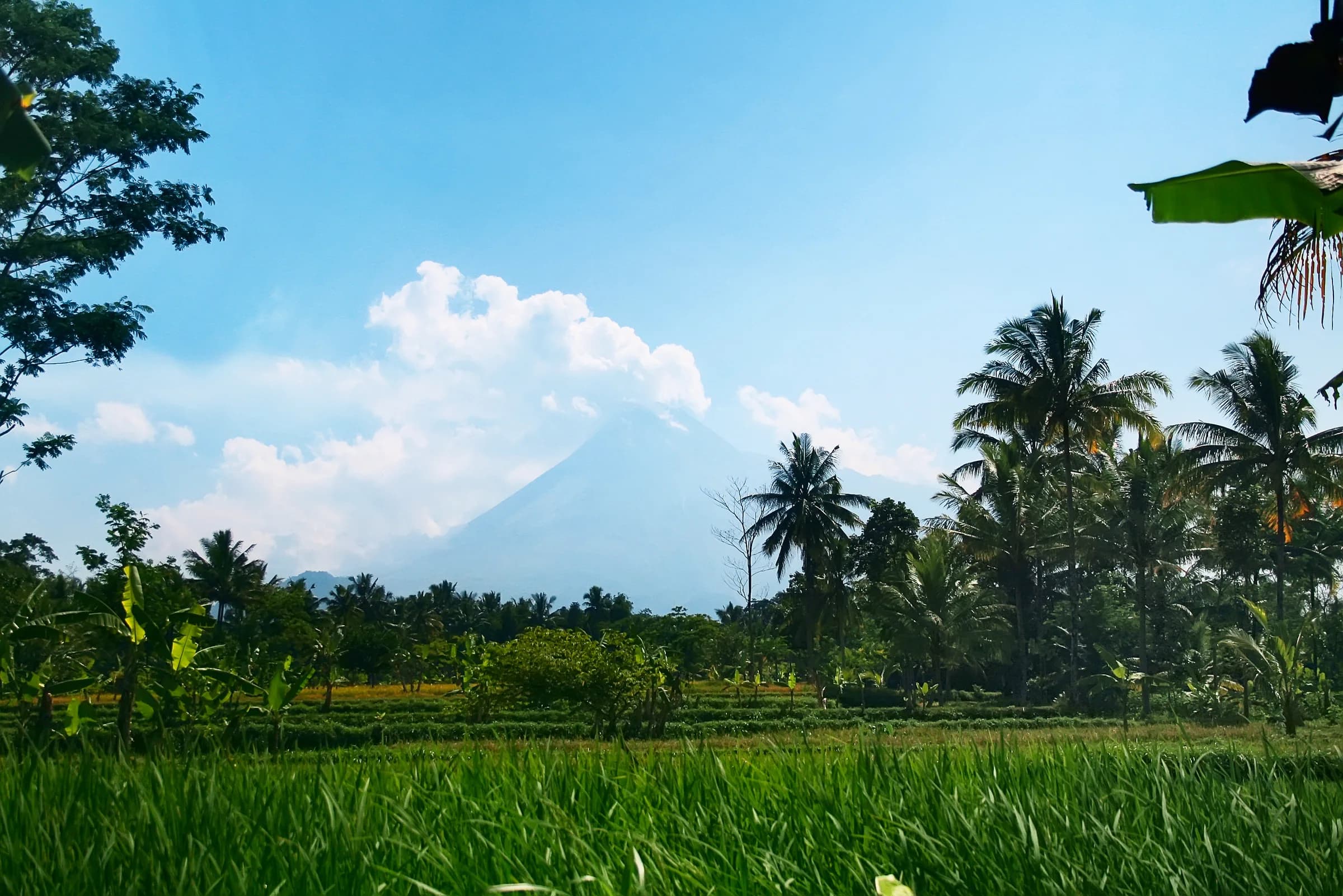
The dry season, roughly April to October, brings the clearest sunrises at Mount Bromo and the Ijen crater and the best views of Merapi from the temples around Yogyakarta. The wet season brings afternoon downpours, but mornings are often fine, and the volcano trips start before dawn anyway.
The end of the dry season has its own risk: fire. In September 2026 a forest fire on Ijen's slopes closed the crater for more than three weeks. If a volcano is the reason for your trip, leave a spare morning, whatever the month.
Lombok and the Gili Islands
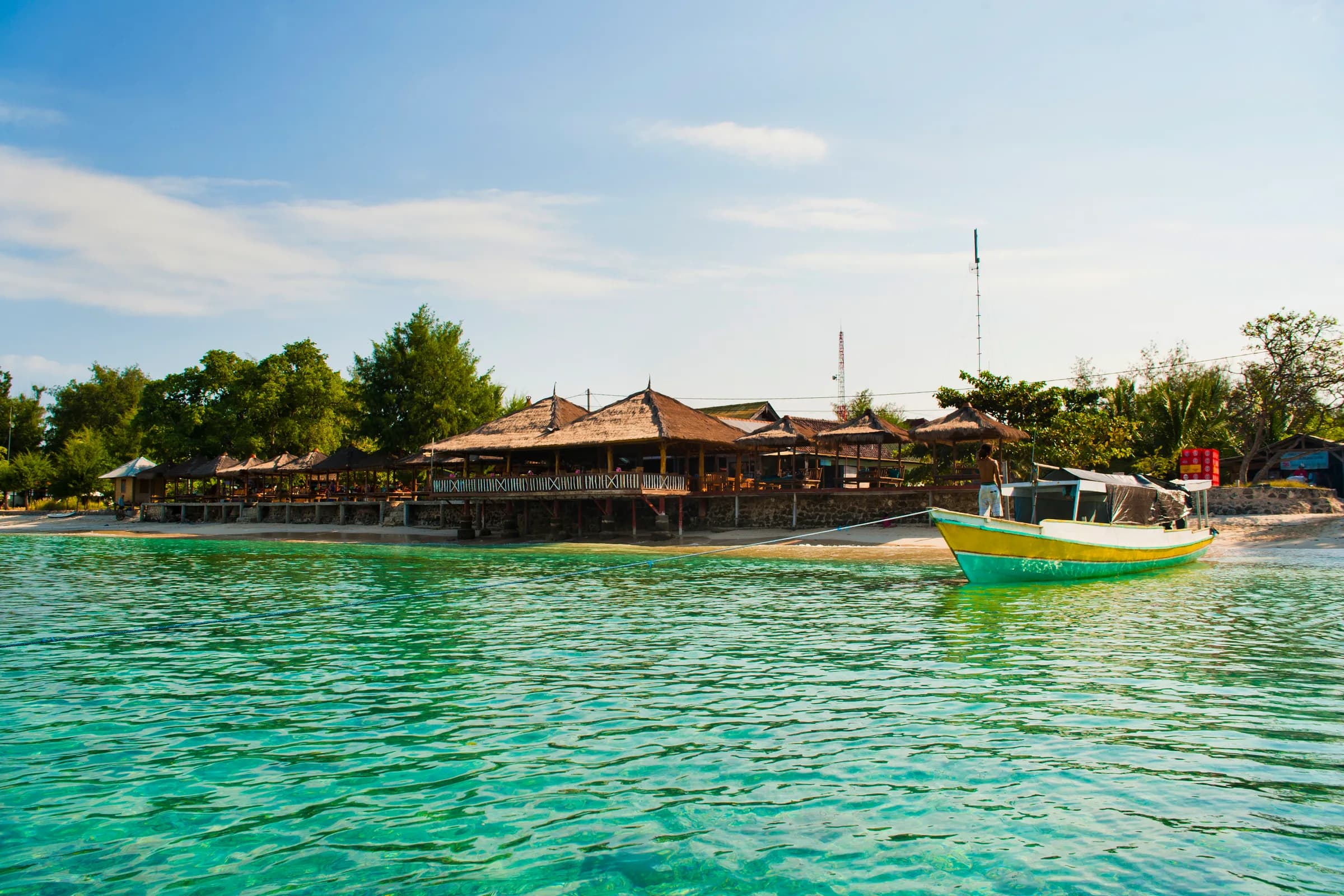
The dry season brings calmer seas, clearer water and the only window for Rinjani. From about November to March, rain is heavier and the crossings from Bali are rougher, and boats are cancelled when the sea is up. The Gili Islands stay open all year and are greener and emptier in the rains, but leave a spare day before any onward flight. Our Lombok guide covers the island in every season.
Flores and Komodo
The dry season runs from about April to October, and Komodo National Park is at its best from April to June and from September to December, before and after the busiest months. September to November is the peak for manta rays. January to March is the rainy season, when high waves can stop the boats for days. July and August are the busiest months and the dragons' mating season, when they are harder to find.
Sumatra
Sumatra does not follow Java's calendar. The rains arrive first in the north and peak there around December, while parts of the Aceh and North Sumatra coasts dry out from January. In many parts of the island the middle of the year is the drier stretch, but dry years can also bring haze from forest fires. If Sumatra is the heart of your trip, check the forecast for the exact province.
Sulawesi
Sulawesi is shaped like a starfish, and its arms catch the winds differently. BMKG expects the 2026 to 2027 rains to start in November or December, peaking in December in some areas and February in others, and the western part of Central Sulawesi to start its dry season in January 2027. Plan by region, not by island.
Papua and Raja Ampat
Papua is the exception to almost every rule here. Rain falls in every month, often in short bursts, and BMKG expects parts of West Papua and Southwest Papua, the province of the Raja Ampat islands, to begin their dry season in February or March 2027. Dive operators in Raja Ampat generally favour October to April, when the sea tends to be calmer; from about June to August the wind picks up and crossings can be rougher.
Holidays that change how you travel
Weather decides how a trip looks. Holidays decide whether you can get a seat. Indonesia's national holidays and joint leave days for 2027 were set in September 2026 by a joint decree of three ministers (the SKB 3 Menteri), and two weeks stand out.
Ramadan and Lebaran 2027
Ramadan is expected to begin around 8 February 2027; the government confirms the exact day just before, after the traditional sighting of the new moon. Travel carries on as normal. Hotels, trains and tourist sites keep running, and in many places evenings come alive after the fast is broken. In more conservative areas some restaurants close or curtain their windows during the day: eat and drink discreetly in public.
The crunch comes at the end. Idul Fitri, or Lebaran, falls on 10 and 11 March 2027, with joint leave on 9, 12 and 15 March. Add the weekends and Nyepi on 8 March, and Saturday 6 to Monday 15 March 2027 is ten days in a row off work for many Indonesians. Millions travel home for the holiday, a journey called mudik: trains and planes sell out weeks ahead, ferries queue for hours and fares rise. If you can, avoid long journeys in that window, and book everything early if you cannot. Jakarta empties out, while home towns such as Yogyakarta fill up.
Nyepi 2027: Bali closes for a day
Nyepi, the Balinese day of silence that opens the Saka new year, falls on Monday 8 March 2027. For 24 hours the whole island stops: no flights, no traffic, no lights after dark. In 2026 Bali's airport closed from 6 am on Nyepi to 6 am the next day, and 440 flights did not run. The ferry from Java stopped running the evening before at Ketapang, Gilimanuk harbour closed early on Nyepi morning, and the boats between Bali and Lombok stopped too. The 2027 times had not been announced when we checked, but expect the same pattern, two days before Lebaran.
If Bali is only your airport on the way to Java or Lombok, simply avoid flying in or out on 8 March.
Christmas and New Year
The year-end holidays, which Indonesians call Nataru, are the other big travel peak. The transport ministry expects four crunch points: 23 to 24 December, 27 to 28 December and 30 to 31 December 2026, and 3 to 4 January 2027. The ferry between Bali and Java is one of the busiest crossings: our news on the Christmas ferry has the peak days. Christmas Day 2026 falls on a Friday, the start of a long weekend.
School holidays and long weekends
Indonesian school holidays fall roughly from late June to mid-July, with dates set by each province, and again at the end of December. Expect busy viewpoints, full family hotels and jeep queues at Bromo. Long weekends do the same on a smaller scale, and one stands out in 2027: from Saturday 15 to Thursday 20 May, Iduladha (17 May), Waisak (20 May) and two joint leave days make almost a week off.
Closures to plan around
Some of the places we write about close on fixed days, and it is worth knowing before you book.
- Mount Bromo closes for the Tengger rite of Wulan Kapitu: from 5 pm on 8 December to the end of 9 December 2026, and from 5 pm on 6 January to the end of 7 January 2027. Our news on the Wulan Kapitu closure has the details. The Tengger festival of Yadnya Kasada is expected around late May or June 2027.
- Mount Rinjani usually closes its trails from January to March, to let the mountain recover and to repair the paths. The last closure ran from 31 December 2025 to 1 April 2026; the 2027 dates had not been announced when we checked.
- Ijen closes on the first Friday of every month for Ijen Rijik, a clean-up day; in December 2026 that is the 4th. The park's own page lists the dates.
All three can also close at short notice for weather, fire or volcanic activity.
Indonesia month by month
This table covers Java, Bali, Lombok and Flores, where most first trips go. The dates are those announced for 2026 and 2027.
| Month | Weather from Java to Flores | Dates to know |
|---|---|---|
| December 2026 | Rains arrive, late this year | Bromo closed 8 to 9 Dec; Ijen closed 4 Dec; year-end peaks from 23 Dec |
| January 2027 | Wet, heavy afternoon rain | Return peak 3 to 4 Jan; Bromo closed 6 to 7 Jan; Rinjani usually closed |
| February 2027 | Peak of the rains | Ramadan expected from about 8 Feb; Chinese New Year 6 Feb |
| March 2027 | Rains easing | Nyepi 8 Mar; Lebaran 10 and 11 Mar; holidays 6 to 15 Mar |
| April 2027 | Dry season begins | Rinjani usually reopens at the start of April |
| May 2027 | Dry and green | Long weekend 15 to 20 May; Waisak 20 May |
| June 2027 | Dry, cool nights in the hills | School holidays begin late June; Yadnya Kasada expected late May or June |
| July 2027 | Dry, peak season | School holidays to about mid-July; Komodo at its busiest |
| August 2027 | Dry, busiest month | Independence Day 17 Aug |
| September 2027 | Dry, still clear | Fewer crowds; fire risk on the volcanoes; manta season starts at Komodo |
| October 2027 | Dry season ending | Fire risk continues; good month for Komodo |
| November 2027 | First rains | Quieter everywhere; Komodo still good |
How to plan around the weather
- Build in a spare day before any international flight if your trip includes a boat crossing, in any season.
- Do the volcanoes first. If Bromo or Ijen is clouded out, you can try again the next morning.
- Book early for the peaks: July and August, the year-end holidays and, above all, the Lebaran holidays.
- In the rains, travel in the morning. Downpours usually build in the afternoon, so do your sightseeing early and keep the afternoon for a long lunch.
- Check closures the week before. National parks announce changes on their official pages and accounts, sometimes only days ahead.
Before you fly

SafetyWing
Travel medical insurance

Airalo
Data from the moment you land
Affiliate links: we may earn a commission if you book, at no extra cost to you.
For a first route through Java's far east, our guide from Bromo to Ijen links the two volcanoes in one trip.