From the east coast of Bali on a clear morning you can see it across the strait: a long, low island and, rising out of it, a mountain so big it seems to belong to somewhere else. That is Lombok, and the mountain is Rinjani. The crossing takes a couple of hours by boat, and on the far side the pace drops noticeably. The roads are emptier, the beaches are wider, and in the villages the call to prayer carries further than the traffic.
Lombok is not a smaller Bali. It has its own people, the Sasak, its own faith, mostly Islam, and its own rhythm. What it shares with its neighbour is the reason most people come: water you want to get into, a volcano you can climb, and enough room to find a beach of your own.
Why go
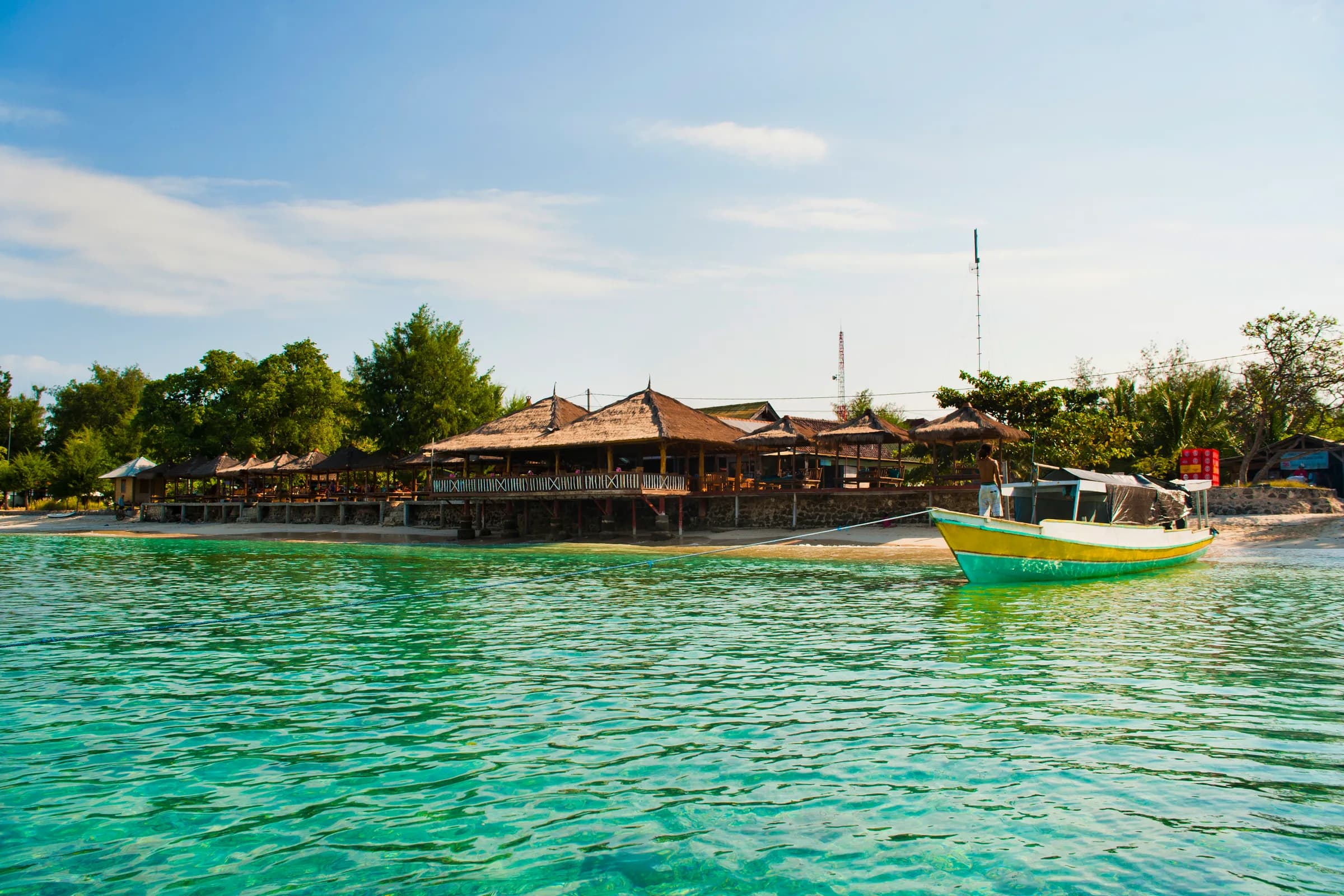
- The Gili islands. Three small islands off the northwest coast with white sand, clear water, turtles on the reefs and no cars at all.
- Mount Rinjani. Indonesia's second highest volcano, at more than 3,700 metres, with a crater lake, Segara Anak, that you can see from the rim on a multi-day trek.
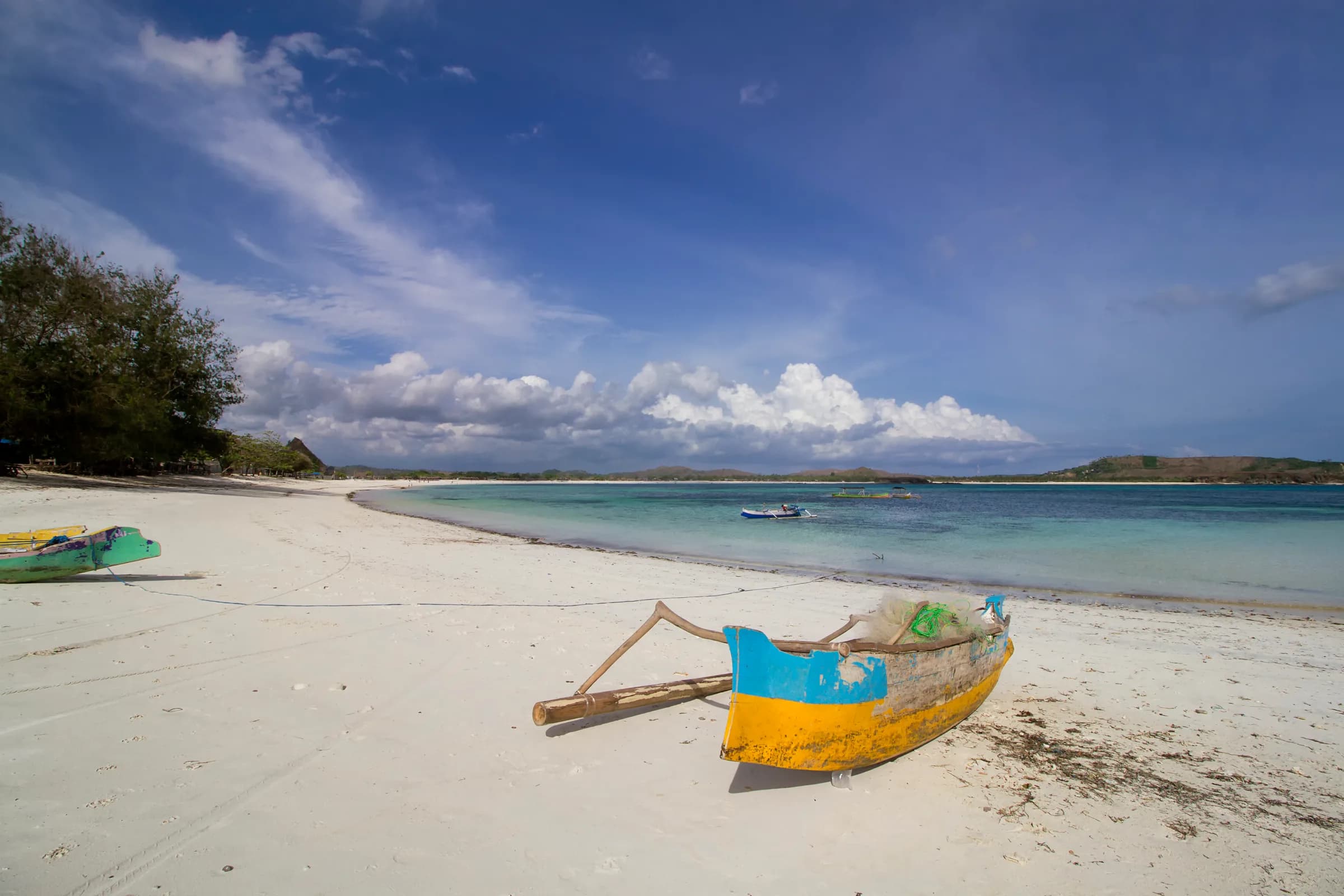
- The south coast. Long bays of pale sand around Kuta, from the twin coves of Tanjung Aan to the gentle surf of Selong Belanak, where many people stand on a board for the first time.
- Sasak life. Traditional villages such as Sade, weaving villages such as Sukarara, and waterfalls in the forest at Senaru on the slopes of Rinjani.
The Gili islands
Gili Trawangan, Gili Meno and Gili Air are close enough to see each other but have very different moods. Trawangan is the largest and liveliest, with the most places to stay and to eat, and a night life that runs late. Meno, in the middle, is the quietest, for people who want a hammock and not much else. Air, closest to the Lombok mainland, sits between the two: relaxed, but with enough cafés and dive shops to keep you busy. If you are still choosing, our guide to where to stay in the Gili Islands compares the best areas on each island, with 2026 prices.
Local rules keep motor vehicles off all three islands. You walk, rent a bicycle or ride in a cidomo, the little horse carts that wait at the harbour. Electric bikes became a common sight too, but in October 2026 North Lombok's transport office said the ban covers them as well and began moving to clear them off the islands; in November it counted about 1,500 and prepared a joint operation to remove them in stages, so do not count on renting one. Foreign visitors pay a small entry levy for the three islands, Rp20,000 per person in early 2026; North Lombok's government was working on raising it to Rp50,000, so expect the new amount once the regulation passes.
Most days here follow the sea: snorkelling over the reefs, a dive with one of the many schools, and sunset from the west coast of Trawangan or Air. Fast boats from Bali stop at the Gilis directly, and small public boats link them to Bangsal on the Lombok mainland. Our guide to the Gili Islands takes them one by one, with the boats, the harbour at Bangsal and what things cost.
Mount Rinjani
Rinjani is a serious mountain. Most treks take two to four days, climbing from the villages of Sembalun or Senaru to the crater rim, with a view down to the blue lake of Segara Anak and, for the strongest, a pre-dawn push to the summit. Nights on the rim are cold, the trails are steep and loose, and the weather changes fast.
The park books every hiker through its e-Rinjani app, on Android and iOS, with a limit of 700 hikers a day across all trails. Its rules say every hiker must be accompanied by a local mountain guide or by someone who has climbed the same route at least three times, a guide may take no more than four hikers, and you need an honest health certificate. In practice, foreign visitors trek with a licensed operator that handles the permit, guide, porters, tents and food. Choose one carefully: the park has reminded hikers of these rules because of the many incidents involving beginners. After a forest fire in September 2026, the Torean trail was still closed in late October while the other trails had reopened, so check e-Rinjani for the route you want.
The trails close every year for the wettest months, and in 2026 they reopened on 1 April. If you are not here for a multi-day trek, the forest walk to the Sendang Gile and Tiu Kelep waterfalls near Senaru gives you a taste of the mountain in a morning.
Rinjani treks and Lombok tours

Viator
Affiliate links: we may earn a commission if you book, at no extra cost to you.
The south coast
Southern Lombok is drier and wilder than the north, a coast of headlands and wide bays. The small town of Kuta (not to be confused with its namesake in Bali) is the base, with guesthouses, cafés and surf schools. It sits inside the Mandalika development, home to the motor racing circuit that hosts MotoGP; on race weekend, which has moved between late September and late October (the 2027 race is provisionally set for 31 October, while a new contract is still awaited), rooms and flights fill up and prices jump, so check the date before you book.
From Kuta, Tanjung Aan is the classic beach, two curves of sand split by a headland. Selong Belanak, to the west, has a long, gentle beach break that suits beginners. Further out, the coast gets emptier and the roads rougher, and a scooter or a driver opens up coves that see few visitors.
If you would rather drive a car or ride a scooter yourself, you need an International Driving Permit that covers that kind of vehicle, and the police on Lombok hold regular road checks, such as a two-week operation in November 2026.
Car with driver on Lombok

Klook
Up to 12 hours, cars for 1 to 14 people
Viator
8 to 10 hours, pickup at your hotel or port
Affiliate links: we may earn a commission if you book, at no extra cost to you.
Where to sleep on Lombok

Agoda

Booking.com
Affiliate links: we may earn a commission if you book, at no extra cost to you.
Sasak villages and respect
Most people on Lombok are Sasak, and most are Muslim. Away from the beach resorts, dress modestly, cover your shoulders and knees when you visit a village or a mosque, and expect a quieter, more conservative mood during Ramadan.
The traditional village of Sade, on the road between the airport and Kuta, is still lived in, and visits are short guided walks through its houses of bamboo, thatch and earthen floors. Nearby Sukarara is known for its hand weaving. Both are used to visitors; ask before you photograph people, and if you buy a cloth, you are paying the person who wove it.
How do you get to Lombok?
- By air. Lombok International Airport, near Praya in the centre of the island, has flights from Bali and from Jakarta and other Indonesian cities. From the airport it is a short drive to Kuta, or a couple of hours to the harbour for the Gilis.
- By fast boat. From Padang Bai, on Bali's east coast, fast boats reach the Gili islands in about one and a half to two hours; services from Serangan and Sanur, closer to south Bali's hotels, take longer. Many also stop on the Lombok mainland.
- By public ferry. The car ferry from Padang Bai to Lembar, in the southwest of Lombok, runs many times a day and takes four to five hours. It is slow and cheap, and the choice for people bringing a car or a motorbike.
The sea between Bali and Lombok can be rough, especially in the wet season, and boats are cancelled when it is. Leave a spare day before an onward flight. Lombok keeps the same time as Bali (WITA).
Boats from Bali to Lombok and the Gilis

12Go
12Go
Affiliate links: we may earn a commission if you book, at no extra cost to you.
From Lombok airport to the Gilis

Welcome Pickups
12Go
12Go
Klook
Affiliate links: we may earn a commission if you book, at no extra cost to you.
When to go and how long to stay
The dry season, roughly April to October, brings calmer seas, clearer water and the only window for Rinjani. The wet season, from about November to March, means heavier rain, rougher crossings and, usually from January to March, closed trails on the mountain, though the island is green and quiet.
Give Lombok at least four or five days: two or three on a Gili island and two on the south coast. Add three or four days for a Rinjani trek.
Lombok also makes a fine ending to a longer journey east through Java. Many travellers watch the sunrise over Mount Bromo, climb Ijen in the dark, then cross to Bali and carry on to Lombok. Some begin further west, in Yogyakarta, near the temples of Borobudur and Prambanan. Our guide from Bali to Ijen covers the crossing between Java and Bali.
Before you fly

Airalo

SafetyWing
Affiliate links: we may earn a commission if you book, at no extra cost to you.