Stand on the western tip of Bali after dark and you can see it: a long black shoulder of land across the water, pricked with the lights of Ketapang harbour. That is Java. Somewhere behind those lights, about an hour inland and two thousand metres up, a crater lake the colour of jade is waiting for you to arrive at two in the morning.
The Bali Strait is only a few kilometres wide, yet it is where most Ijen plans quietly fall apart. A ferry ticket that can no longer be bought at the port. A clock that jumps back an hour. A medical letter nobody mentioned. We know this crossing well, and we have watched travellers learn these lessons the hard way. This guide is here so you don't have to.
The short answer
| Way | Best for | Effort | Time from south Bali |
|---|---|---|---|
| Guided overnight tour from Bali | First timers, short trips | Lowest | Leave in the evening, back the next afternoon |
| Private driver, one night in Banyuwangi | Comfort, families, photographers | Low | Two relaxed days |
| Bus and ferry on your own | Budget travellers with time | Highest | A long day, then a night hike |
Why go to Ijen
Ijen is an active volcano at the eastern tip of Java, about an hour and a quarter from Banyuwangi. The hike is about three kilometres and takes most people around two hours, in the dark. The reward is the view from the crater rim at first light: a turquoise lake the colour of jade, the largest acidic lake in Java, far below you. You may have seen photographs of blue fire in the crater too, but do not plan around it (more on that below).
Four things that catch people out
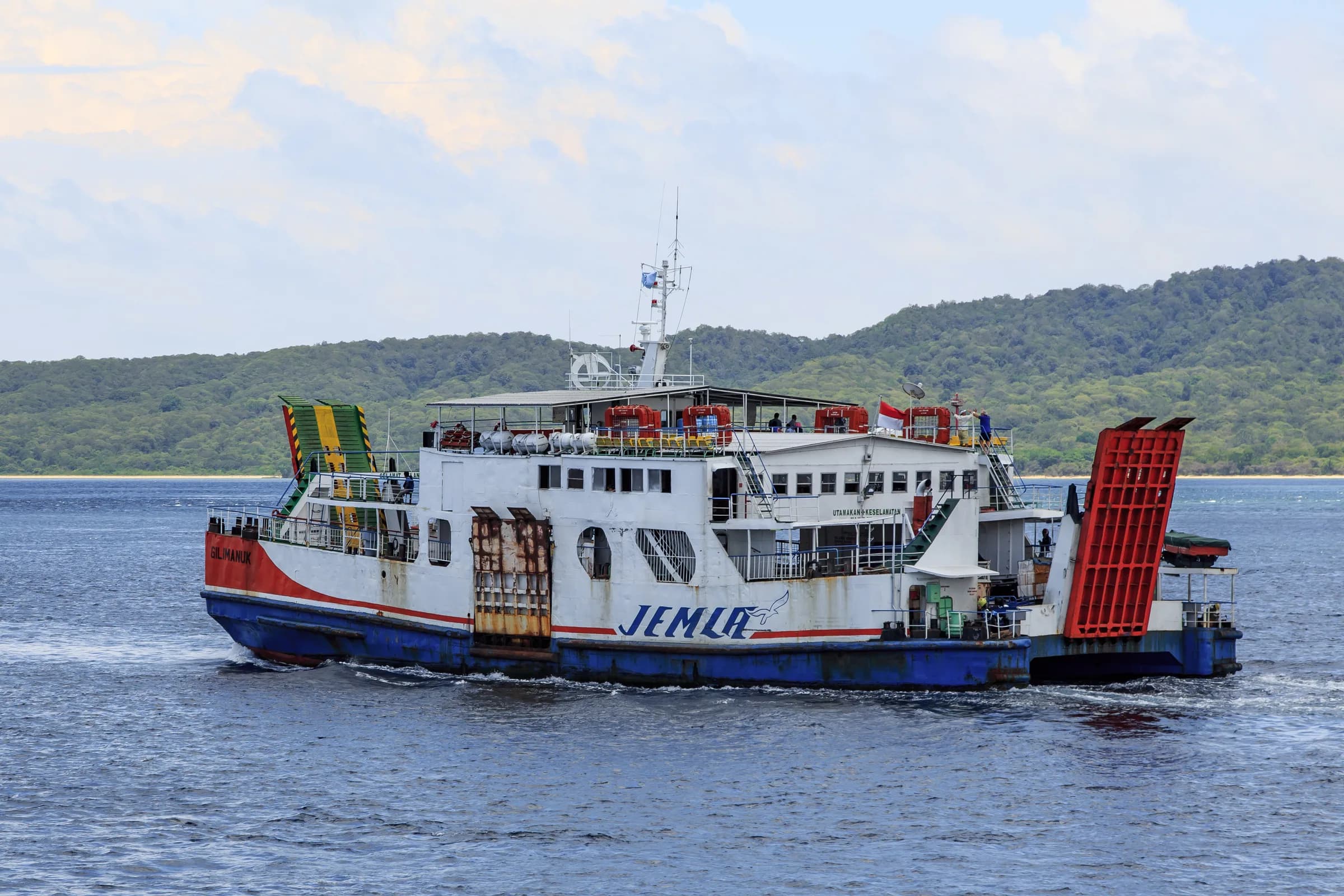
- The ferry is online only. Tickets for the Gilimanuk to Ketapang crossing are sold through the Ferizy app and website, not at the port, and the app may refuse to sell you a ticket once you are already standing beside the harbour. Buy it the day before, and choose passport as your ID type. Foreign cards are sometimes declined; if yours is, your hotel or tour can buy the ticket for you.
- Java runs one hour behind Bali. Leave Bali at 7 pm and you land in Java at roughly 7 pm again, local time. Tour pickups and gate times on the Java side are always in WIB.
- You need a health certificate. Ijen asks every hiker for a doctor's letter issued no more than three days before the visit, and the name on your ticket must match your passport. Most tours arrange this. If you travel alone, the health post in the Paltuding car park at the trailhead issues one around the clock for about Rp20,000 (reported in 2025), or you can visit a clinic in Banyuwangi before you set off.
- Ijen closes on the first Friday of every month. The mountain rests for a day while rangers and villagers clean the trail. Check the calendar before you book. It can also close without warning for weather, volcanic activity or fire, as it did for most of September 2026 (what happened). Entry tickets are booked online and cannot be refunded or moved, so book once your dates are firm.
How to get from Bali to Ijen
There are three ways across the strait, from the easiest to the cheapest. All of them end at Paltuding, the trailhead, in the small hours.
Option 1: A guided overnight tour from Bali
This is the version most visitors choose, and for good reason. A driver collects you from your hotel in the evening, crosses the island while you doze, and handles the ferry, the paperwork and the hand over to a local guide on the Java side. Somewhere past midnight you are at Paltuding, the trailhead, pulling on a jacket you did not think you would need in Indonesia.
The hike is about three kilometres and takes most people around two hours to the crater rim. The gate opens at 2 am. By sunrise you are looking down into the largest acidic lake in Java, and by early afternoon you are back on the ferry, sleeping through the crossing for the second time.
It is efficient, and it is tiring. If you have only a day to spare, it is the right call.
Overnight Ijen tours from Bali
Affiliate links: we may earn a commission if you book, at no extra cost to you.
Option 2: A private driver and one night in Banyuwangi (our pick)
The overnight tour asks you to cross an island, a strait and a volcano without a proper bed. There is a gentler way.
Drive from Bali in the morning, roughly three to four hours to Gilimanuk depending on where you start and how the traffic behaves. Cross in daylight, when the strait is busy with fishing boats and the green hills of Java come slowly into focus. Spend the afternoon in Banyuwangi, eat well, sleep for a few hours, and leave for Paltuding around midnight from a town that is only about an hour and a quarter from the trailhead. Not sure where to sleep? Our guide to staying near Ijen compares the options.
You arrive rested, which matters more than it sounds on a steep, sandy trail in the dark. You also gain a day in a part of Java that most travellers rush through: coffee farms on the slopes of the volcano, Osing villages with their own language and music, and a coastline that faces the sunrise over Bali.
Where to sleep in Banyuwangi
Affiliate links: we may earn a commission if you book, at no extra cost to you.
Option 3: On your own by bus and ferry
It can be done, and it is the cheapest route. Long distance buses run from the Denpasar area towards Java, typically for around Rp200,000 to Rp300,000, and the ferry itself costs only about Rp10,600 per adult. From Ketapang you will need a local car or motorbike to reach Paltuding, because there is no public transport to the trailhead at night.
The catch is time and certainty. Buses are slow, ferry queues can swell during Indonesian holidays, and you will still need your health letter and your online tickets. Give yourself two days rather than one.
Buses from Bali to Banyuwangi
Affiliate links: we may earn a commission if you book, at no extra cost to you.
What about flying?
Banyuwangi has its own airport, but there is no direct flight from Bali at the moment (November 2026): flights link it with Surabaya and Jakarta, so flying from Bali means a connection and usually takes longer than the ferry. Check the airlines before you build a plan around it.
A word about the blue fire
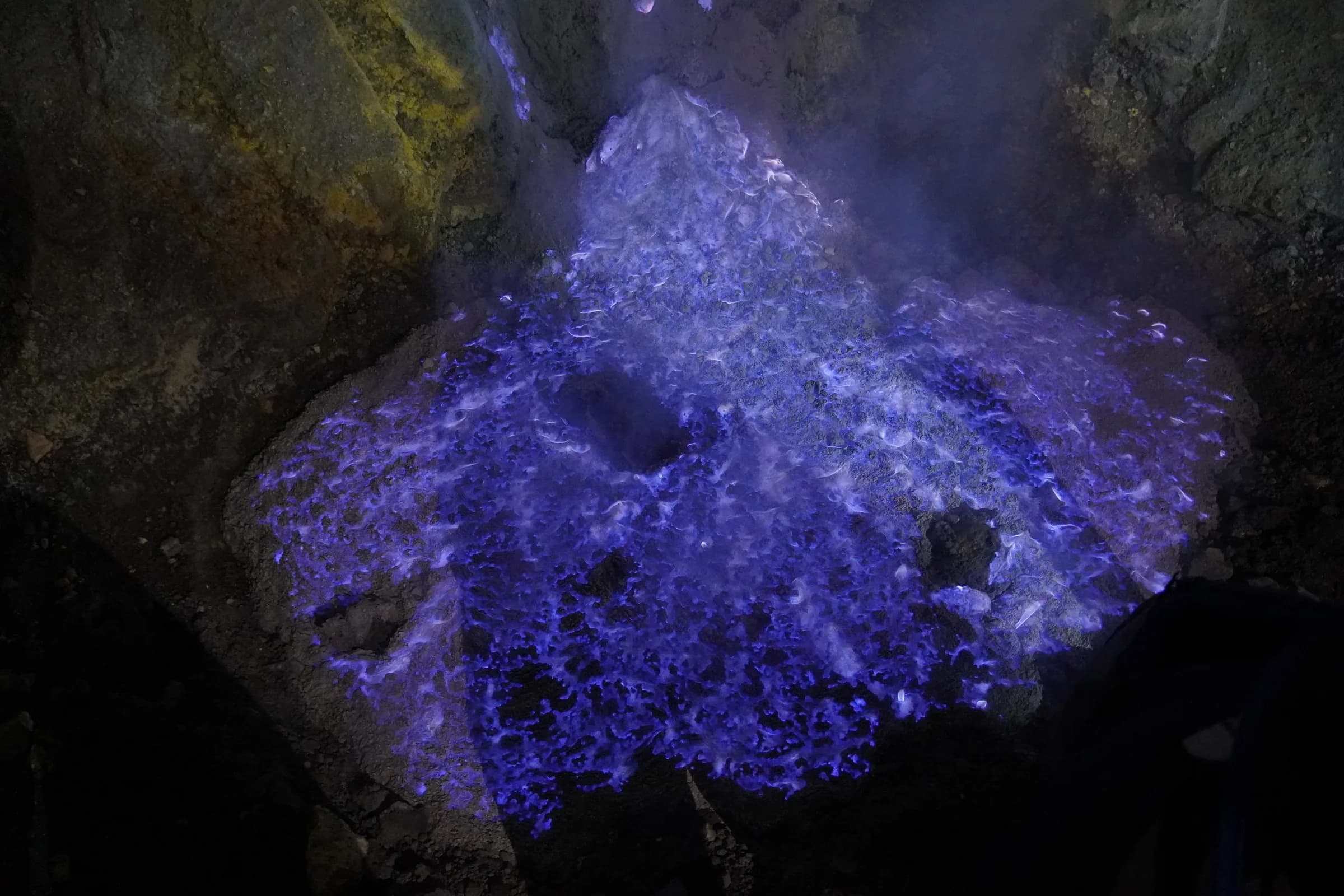
You have probably seen the photographs: ghostly blue flames dancing across the crater floor. They are real, and they are extraordinary. But be careful with any promise to show them to you.
The flames burn on the crater floor, and since 2024 a circular from the park authority has barred visitors from going down there; local reports since late 2025 also say the flames have dimmed. The park managers themselves describe the blue fire as a natural phenomenon rather than a guaranteed attraction, so do not plan your trip around it. Go for the whole experience: the night hike, the miners carrying sulphur on their shoulders, the turquoise lake at first light.
What to pack
- A warm jacket and gloves (it can be close to freezing at the rim)
- Shoes with real grip, not sandals
- A headlamp
- A proper mask for sulphur gas (guides usually lend one)
- Your passport, printed or saved tickets, and the health letter
- Small cash in rupiah for the trailhead and warungs
Before you fly
Affiliate links: we may earn a commission if you book, at no extra cost to you.
Before you go
Ijen rewards people who arrive prepared and a little humble. Book the ferry before you reach the port. Set your watch back an hour. Carry the letter. And if you can, give yourself one quiet night on the Java side of the strait. The volcano is the reason you came, but the people who live in its shadow are the reason you will remember it.