Before the first hikers reach the rim of Ijen, the crater has usually been at work for hours. Sulphur mining here goes back to the late 1960s, and for most of that time it has been done the same way: by men who break the hardened sulphur loose by hand and carry it out of a volcano on their shoulders.
How the sulphur is made
Gas rises from vents beside the crater lake. Miners lead it through pipes, reported as 50 to 150 metres long, where it cools and condenses. What drips out at the lower end hardens into bright yellow sulphur, which is broken into slabs and loaded into a pair of baskets hung from a bamboo pole.
The sulphur is weighed at Paltuding and bought by PT Candi Ngrimbi, the company that holds the right to mine at Ijen. Much of it has gone into refining sugar, and it has also been used for vulcanising rubber and in cosmetics and medicines.
The climb out
A full load is usually reported at 70 to 90 kilograms. From the vents, a miner climbs around 300 metres up slopes of 45 to 60 degrees to the crater rim, then walks about three kilometres down to the weighing station. Work starts soon after midnight, and two round trips a day has been typical.
What it pays
Miners are paid by the kilogram, and the rate has risen slowly: Rp200 a kilo was reported in 2000, Rp780 in 2013, Rp1,000 in 2016 and Rp1,250 in 2023, the most recent figure we could confirm. At the 2023 rate, an 80 kilogram load was worth Rp100,000.
“I barely make enough money to buy food for my family and for my children's education.”
Protection has been basic. Helmets, masks and boots have been handed out, but in 2013 the Jakarta Post found many miners not using them, and no accident insurance.
“There is no insurance, no BPJS either. If you get sick, you pay yourself.”
Why is the work so dangerous?
Sulphur dioxide stings the eyes and catches in the throat, and the miners breathe it for hours at a time. The crater can also turn without warning. In 1976 a burst of gas reportedly killed 11 people, according to the Jakarta Post. In June 2020 a miner named Andik died after a wave around three metres high rose on the crater lake, and mining was suspended.
Why there are fewer of them now
Where there were once hundreds of miners, reports from 2023 put the number somewhere between ten and fifty. The reasons given are the low pay, younger men refusing the work, the Covid years, and a better-paid job that grew up on the same trail.
The trolleys
Many former miners now pull visitors up the path from Paltuding in wheeled carts. In July 2026 Radar Banyuwangi reported rates of Rp1 million to the top, Rp500,000 down and Rp1.5 million for the round trip, with two men pulling on the way up and one on the way down.
It pays more than sulphur, but it is less certain.
“Mining is certain pay. With the trolley you still have to find guests.”
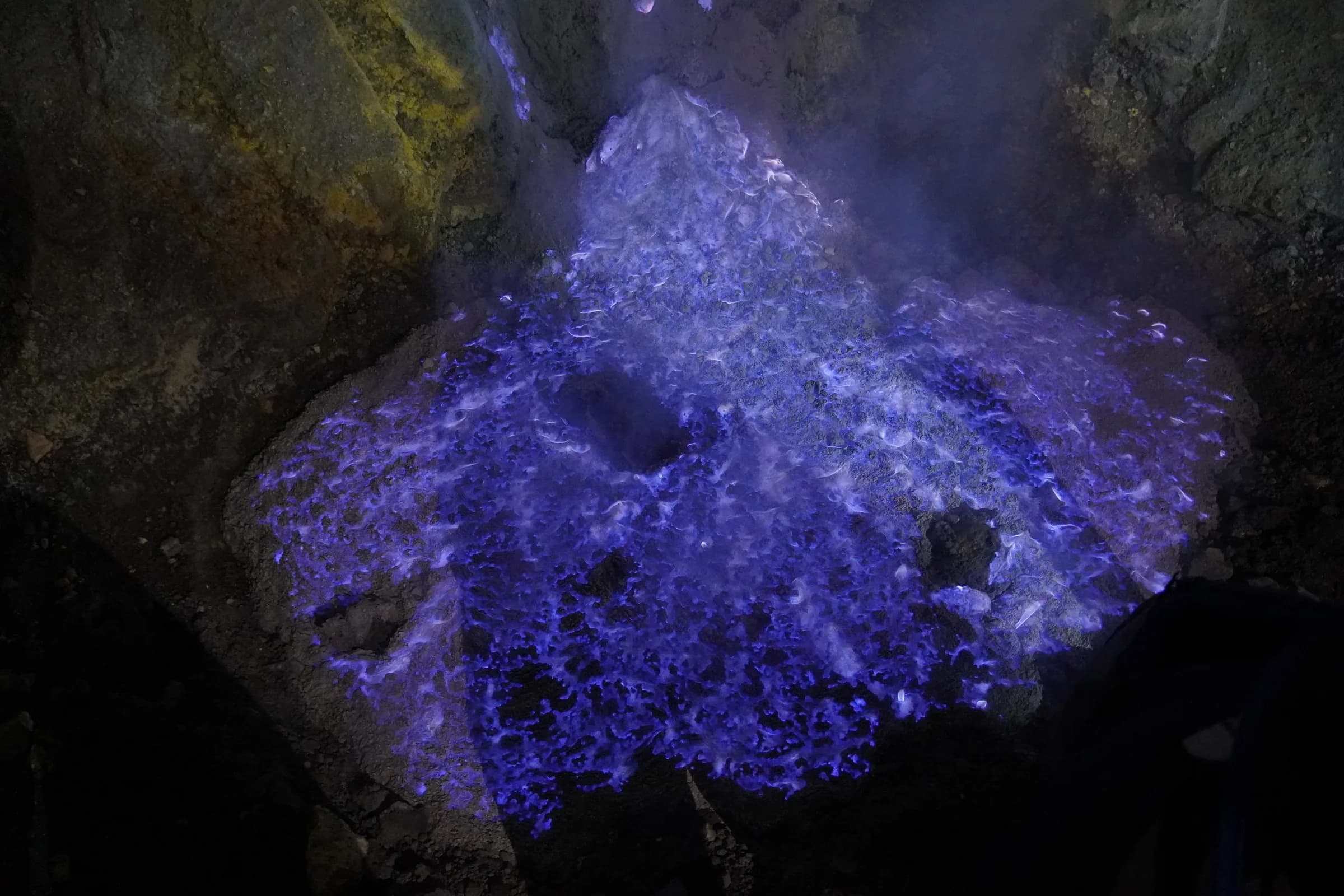
The change has had a side effect visitors notice. In late 2025 Banyuwangi's tourism office said the blue fire had faded partly because there were no longer enough miners tending the gas pipes.
How to visit with respect
- Ask before you photograph anyone, and accept a no. Ethical travel experts quoted by National Geographic advise asking permission or not taking pictures of the miners at all; critics call photos taken for tips "poverty tourism".
- Remember it is a workplace. Step aside for anyone carrying a load, and keep away from the pipes and vents.
- If you take a trolley, you are paying people who used to carry sulphur. Agree the price before you set off.
- Sulphur souvenirs. Some miners have long made small sulphur shapes to sell to visitors. Buying one puts money straight into local hands.
For the practical side of the hike, see our guide to Ijen Crater. We will update this story when newer figures on pay and numbers are published.