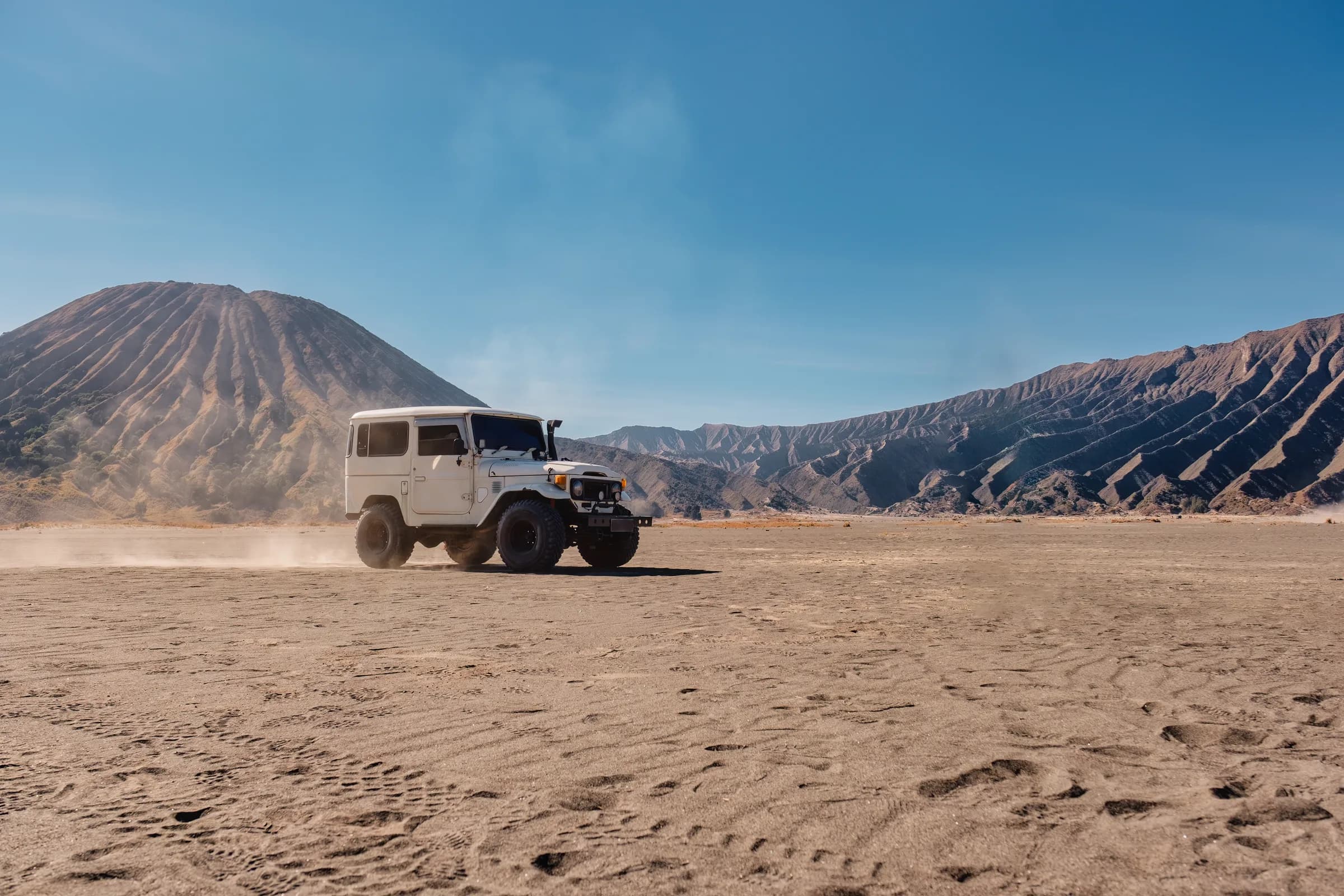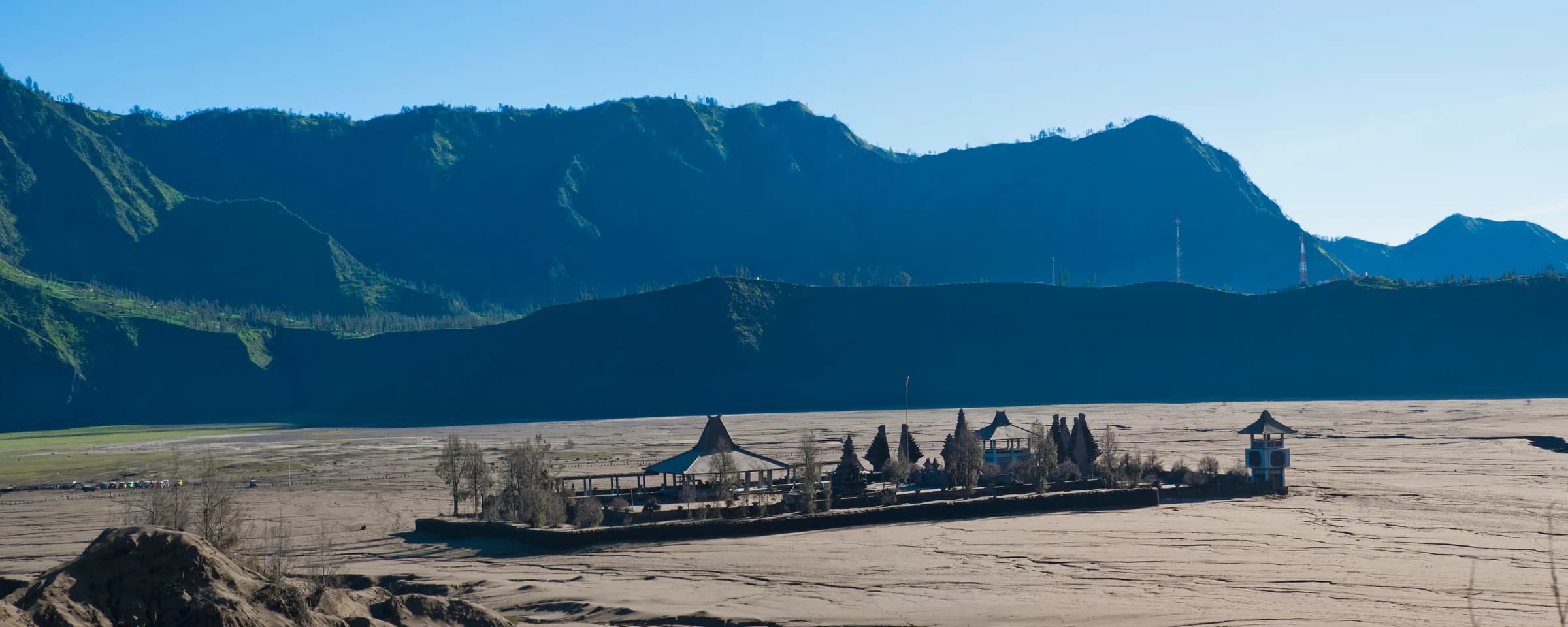
In the small hours of 1 June 2026, detikJatim reported, thick fog lay over the sand sea below Mount Bromo and the air was bitterly cold. Inside the walls of Pura Luhur Poten, thousands of people from the villages around the caldera sat with their offerings while their priests read the old story of their people and prayed. Before dawn, they would carry those offerings up the slope of the volcano and give them to the crater, as the Tengger have done at Yadnya Kasada for longer than anyone can say.
It is the most important night in the Tengger year. Most people who visit Bromo come for the sunrise and leave by breakfast, and many never learn that the villages they sleep in, and the crater they climb, are sacred to the people who live here.
Who are the Tengger?
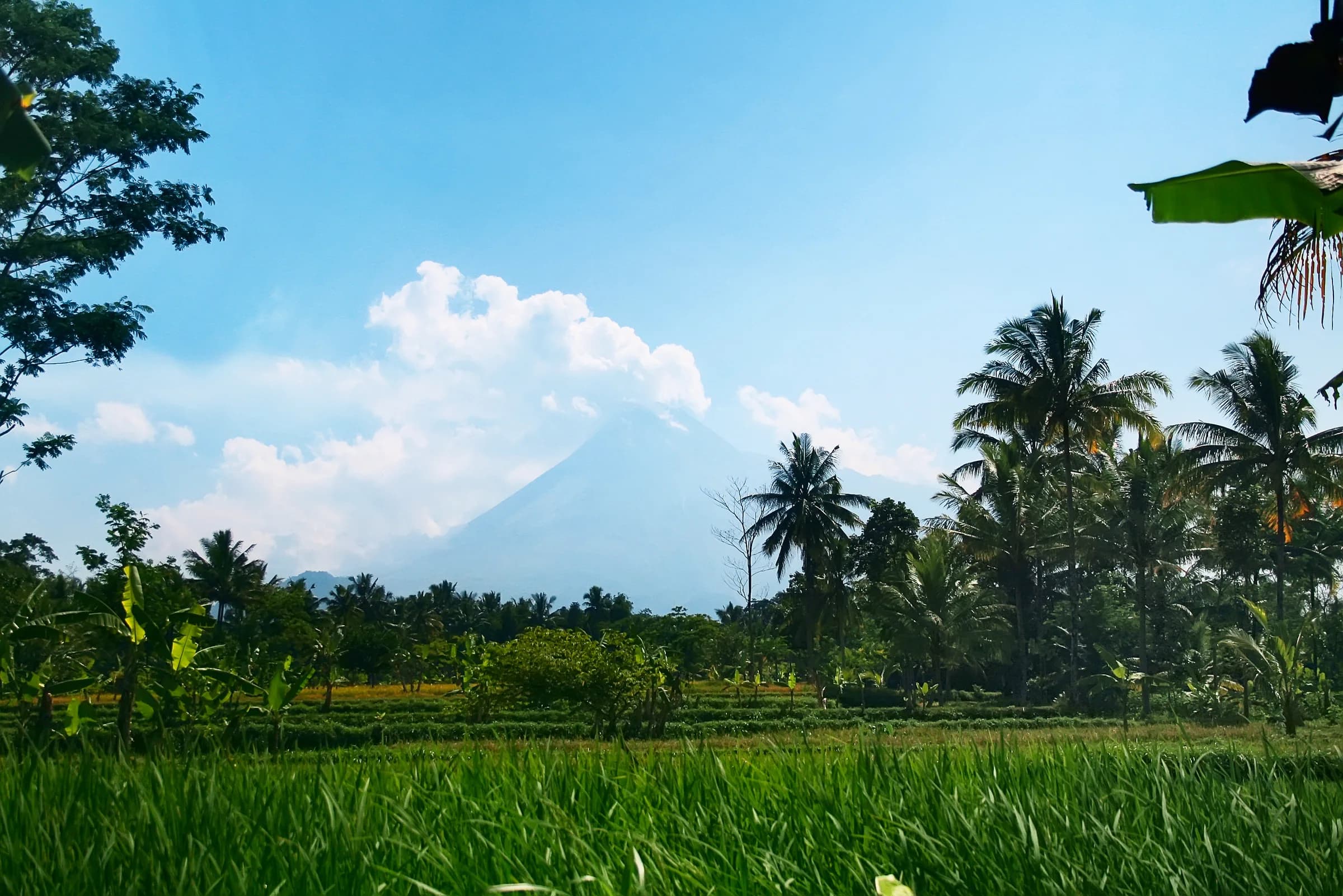
The Tengger live in more than 30 villages on the high slopes around the Tengger caldera, spread over four regencies: Probolinggo, Pasuruan, Malang and Lumajang. Cemoro Lawang, where most travellers stay, is a hamlet of the Tengger village of Ngadisari. Wonokitri and Tosari are Tengger villages on the Pasuruan side, and Ngadas and Ranu Pani sit deeper in the mountains towards Semeru. Their fields of potatoes, cabbages and leeks climb slopes so steep they look painted on.
Most Tengger follow a Javanese form of Hinduism that is quite different from what visitors see in Bali. There are no castes and no Brahmin priests. Each village has its own priest, the dukun pandita, who leads weddings, offerings and the rites for the dead, and prayers are said in Javanese and Sanskrit. The dead are buried, not cremated. Not every Tengger is Hindu, either: some are Muslim or Christian, and many still take part in the village ceremonies.
An old copper-plate charter from the Majapahit era already describes the people of this area as servants of the holy mountain, Brahma, which historians read as Bromo. Tengger tradition says their ancestors came up here when Majapahit fell in the early sixteenth century. Historians are not all convinced, but the story is told in every village.
The legend of Roro Anteng and Joko Seger
The name Tengger, the story goes, comes from two people. Roro Anteng was a young noblewoman of Majapahit and Joko Seger a young hermit. They married and settled on the mountain, but no children came. They prayed at Bromo, and the god of the mountain promised them children on one condition: the youngest would be given back to the crater.
They had twenty five. When the time came, they could not bear to keep the promise, and the mountain erupted. The youngest, Kesuma, gave himself to the crater to save the others, and from inside it asked his family to bring offerings every year, at the full moon of Kasada. Take teng from Anteng and ger from Seger and you have Tengger. Tellings differ on the details, the number of children and the son's name, but not on the promise.
Why do the Tengger bring offerings to Bromo?
Kasada is the twelfth month of the Tengger calendar, a lunar calendar based on the Saka year, and the ceremony falls on its fourteenth day, at the full moon. The offerings keep the promise made to Kesuma, but they are also thanks for the harvest and a prayer for health and safety in the year ahead. Bambang Suprapto, who heads the Hindu council in Probolinggo, described the 2026 ceremony to detikJatim as the Tengger's way of giving thanks for what the land had given them.
Kasada is also when new priests are made. A candidate must recite the mantras before the senior priests at Pura Luhur Poten, in a test called mulunen, and only those who pass may serve their village. In 2026 three new dukun pandita were confirmed.
What happens on the night of Yadnya Kasada
The preparations start days before. In 2026, holy water was fetched from six springs and carried to the temple, and offerings were laid at points around the Tengger villages. On the night itself, processions came down from the caldera rim at Cemoro Lawang and Dingklik and crossed the sand to Poten. Inside, the ceremony followed its fixed order: the opening, the reading of the history of Kasada, the prayers of the priests, the test of the new priests and the close.
Then the community climbed to the crater rim with the ongkek, offerings of vegetables, fruit, flowers and rice arranged on bamboo frames, along with live chickens and goats, and gave them to the crater. If you see photographs of people on the inner slope catching offerings in nets, know that this is not part of the ritual: they are collectors from outside, and the Tengger themselves do not take part.
When is Yadnya Kasada in 2027?
At the time of writing, no date has been announced. Because the ceremony follows the full moon of a lunar month, it moves every year: it fell on 22 June in 2024, 11 June in 2025 and 1 June in 2026. For 2027, expect late May or June. The Tengger priests' council fixes the day, usually a few weeks ahead, and the national park then publishes its closure: in 2026 the park's notice came on 21 May, nine days before the closure began.
Can visitors watch Yadnya Kasada?
Not at the moment. Since 2020 the ceremony has been closed to tourists every year. In 2026 the closure was complete: from midnight on 30 May to the end of 2 June, nobody but people taking part in the ritual could enter the caldera, and only cleaning crews on the last day. Visitors were allowed back from 1:00 on 3 June. In 2025 the park pointed visitors to viewpoints on the caldera rim instead.
The head of Ngadisari has said that visitors may one day be allowed to watch from a set distance, with rules to follow. Until that happens, plan your Bromo trip around the closure, not into it. If you are near Bromo during Kasada, the villages are busy and the mood is festive, and that is a good reason to be quiet, patient and out of the way.
How to visit Bromo with respect
Whenever you come, you are walking through a sacred place. In 2024 the Tengger priests' council declared the Bromo area a sacred zone and set out what is not allowed, with sanctions that range from a cleansing ritual to fines. The park has repeated these rules since, after paragliders flew over the caldera in 2025.
- No drones, balloons or paragliders over the sacred area.
- Throw nothing into the crater except offerings, and never touch or take the offerings you see on the steps or at the temple.
- Take nothing away: no sand, stones or plants.
- Leave no litter, and do not camp in the caldera.
- Do not climb or sit on temple walls or other sacred structures, and never cut through a procession.
Tengger elders have also asked visitors to use the old names of places in the caldera, not the nicknames invented for tours. Ask before you photograph people, and keep your flash off near prayers.
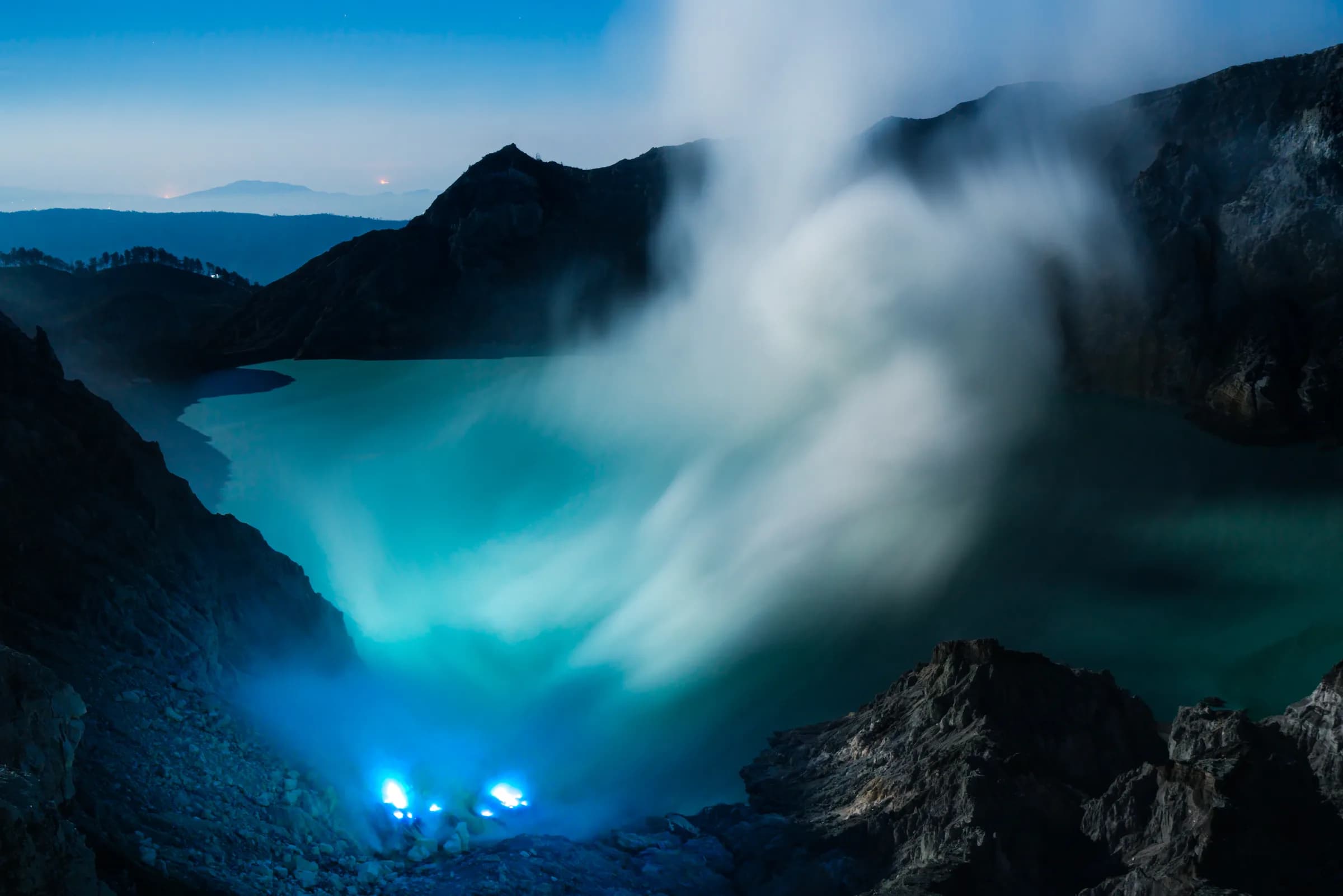
There is a practical side too. Bromo has been at Level II since a small eruption on 5 November 2026, and nobody may go within 1 kilometre of the active crater, so the steps to the rim are closed for now. The viewpoints and the sand sea are open; our guide to Mount Bromo covers tickets, closures and how to visit, and our route from Bromo to Ijen takes you on to the next volcano, where the sulphur carriers of Ijen tell a very different story of work on a mountain.
Bromo tours with a local driver or guide

Viator

Klook
Affiliate links: we may earn a commission if you book, at no extra cost to you.
Beyond Kasada
Kasada is the best known Tengger ceremony, but not the only one. Karo, in the second month of the calendar, honours the ancestors with the sacred Sodoran dance and visits from house to house; Tengger of every faith join in, and in 2026 the celebrations opened in Tosari at the end of July. Unan-unan, held about every five years, cleanses the village and the land. And in Wulan Kapitu, the seventh month, the Tengger keep a quiet month of fasting and restraint, and the caldera closes to visitors for a day or two at its start and end. This season the park has fixed the days: the caldera is closed from 17:00 on 8 December to the end of 9 December 2026, and from 17:00 on 6 January to the end of 7 January 2027 (the closure in detail). These dates move with the calendar too, so check the park's announcements before you travel.