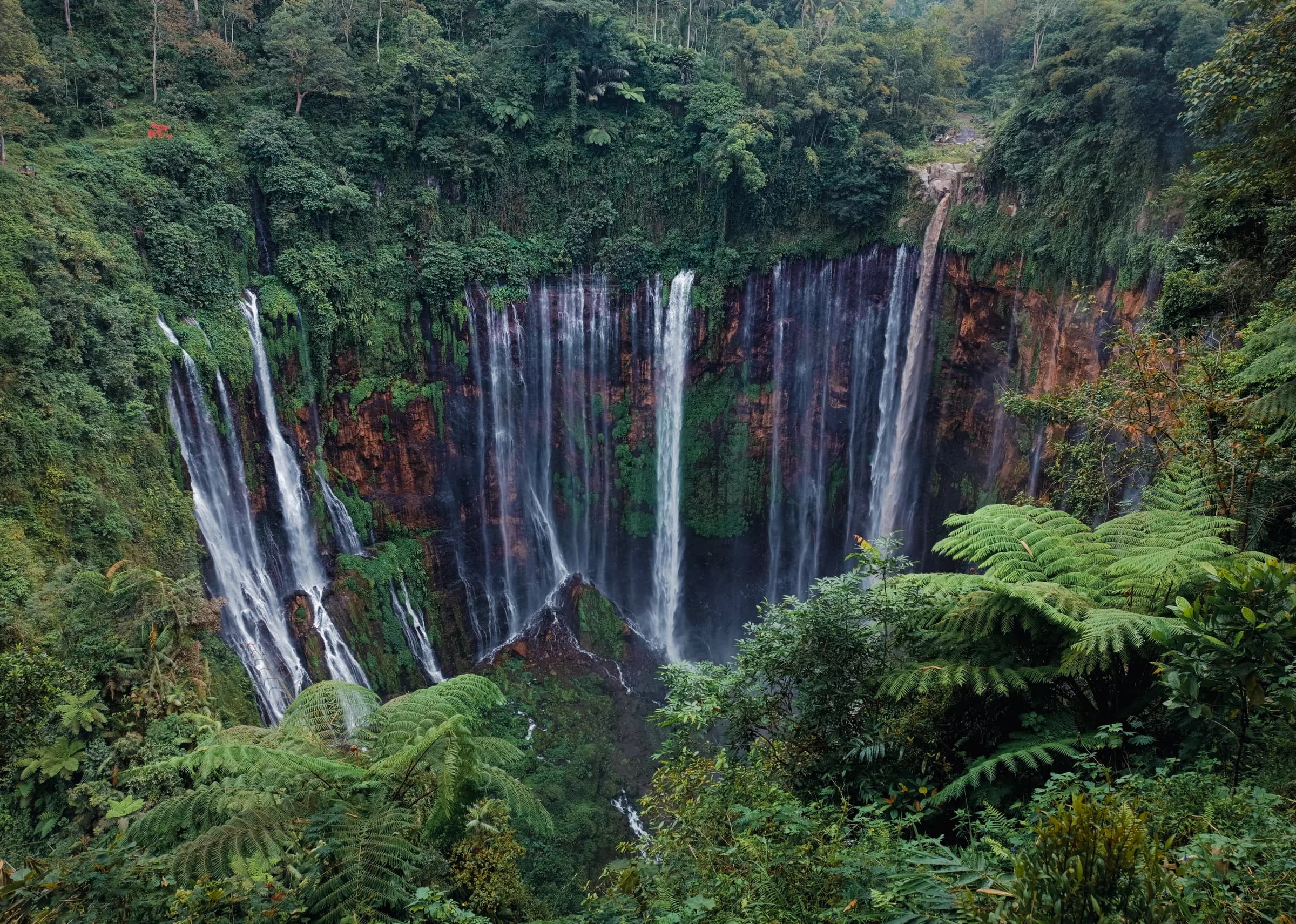
Tumpak Sewu, the great curtain of water on the southern slopes of Mount Semeru in East Java, is open again. On 2 November 2026 a lahar, a flood of mud, sand and volcanic rubble washed down by heavy rain, swept along the river below the falls, and visitors were kept away from the water. Six days later a reporter from Kompas found the waterfall open, with visitors walking down to its foot as usual.
Is Tumpak Sewu open now?
Yes. The waterfall opens every day from 6 am to 5 pm, according to Kompas (16 November) and Tribun Travel (18 November). You can look down on it from the panorama viewpoint at the top, or walk down to the river at its base. Mount Semeru, about 14 kilometres to the north, is still on alert Level III and erupted again on the morning of 17 November, so conditions can change quickly after heavy rain.
What happened on 2 November
Rain began to fall hard on the summit of Semeru at 11:40 pm on 1 November. Through the night a lahar ran down several of the mountain's rivers, among them the Glidik, which flows below Tumpak Sewu along the border between Lumajang and Malang regencies. Instruments at the Semeru observation post recorded its tremor for six hours. Water and volcanic sand flooded roads and some homes in Lumajang. At the waterfall, officers and the site's managers told visitors to keep away from the river and not to go down to the base.
Tumpak Sewu tickets, hours and the 2 pm rule
- Foreign visitors: Rp100,000 per person. Indonesians pay Rp20,000.
- Opening hours: every day, 6 am to 5 pm local time.
- The walk down: it must start by 2 pm. After that you need a local guide, Rp200,000 for a group of up to five.
- Paying: once, at the ticket booth at the top. The same ticket covers the descent.
- Who must stay at the top: signs at the site bar people with heart disease, high or low blood pressure, asthma, vertigo or epilepsy, pregnant women and older visitors from the walk down. If you need to be carried back up, you pay for it. The panorama viewpoint at the top needs no climb.
The entrance is on the Lumajang side, in the village of Sidomulyo in Pronojiwo district, on the road between Lumajang and Dampit.
Is it safe to visit while Semeru is erupting?
The closed zones lie elsewhere on the mountain. Indonesia's volcanology agency keeps everyone out of a 5 kilometre radius around the summit, and out of the southeast sector along the Besuk Kobokan river up to 13 kilometres, with 500 metres of its banks closed beyond that, because hot ash clouds and lahars could reach 17 kilometres down that valley. Tumpak Sewu lies outside these zones, south of the summit.
The real risk at the waterfall is the river itself. A lahar is born from rain high on the mountain, so it can arrive under a clear sky at the falls.
How to plan your visit
Come in the morning. The wet season has begun, afternoon storms are common on Semeru's slopes, and a late start means paying for a guide to go down. Ask your driver or guesthouse whether it rained on the mountain overnight. If the river runs brown and fast, or the staff say no, stay at the top: the view from the panorama is the one most people come for anyway.
Many travellers pair Tumpak Sewu with Bromo and Ijen. Our Mount Bromo guide covers the sunrise viewpoints, which stay open while the crater is closed after its own eruption on 5 November (latest on Bromo), and our Bromo to Ijen guide takes you on to the blue lake. We will update this page if the waterfall closes again or Semeru's alert level changes.